

Hi there! How can we help you today?
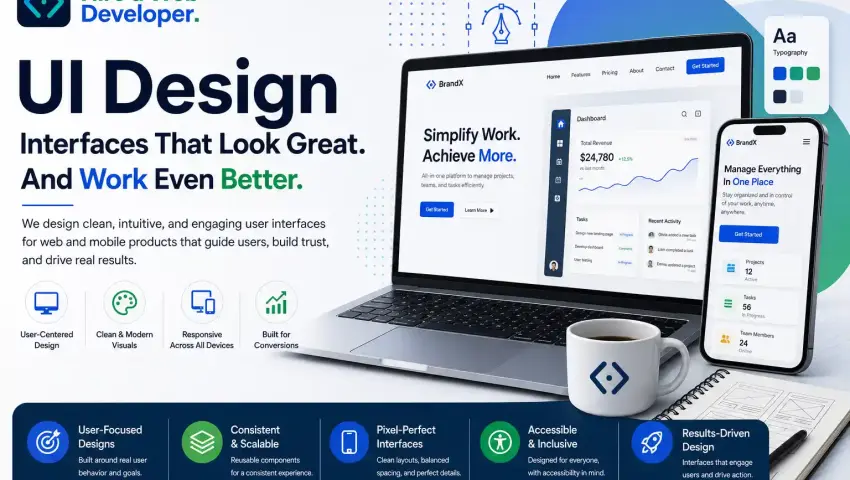
UI/UX Design
Custom user interface design services focused on clean visuals, intuitive layouts, and interfaces that make your product easier and more enjoyable to use.
Service Overview
UI/UX design is the foundation of exceptional digital experiences. It's the invisible force that transforms ordinary websites and applications into intuitive, enjoyable, and effective tools that users genuinely want to use. Unlike graphic design, which focuses primarily on aesthetics, UI/UX design encompasses the complete user journey—from the moment someone discovers your digital product to the instant they accomplish their goal and leave satisfied.
The distinction between UI and UX is important to understand. User experience design addresses the overall feel of the product, including how users interact with it, the emotional responses it triggers, and whether they can achieve their objectives efficiently. User interface design, on the other hand, focuses on the visual elements users interact with—buttons, icons, spacing, typography, color schemes, and responsive layouts. Both disciplines work together to create cohesive, delightful digital products.
Our UI/UX design services combine strategic thinking, creative excellence, and technical expertise to deliver designs that solve real business problems. We don't just make things look good—we make them work exceptionally well. Every design decision is intentional, backed by research, and focused on achieving measurable outcomes for your business and your users.
Introduction
Your website or application has only a few seconds to make a lasting impression on visitors. Research consistently shows that users form opinions about digital products within milliseconds of their first interaction. If your interface feels cluttered, outdated, or confusing, users will leave—often permanently. In an increasingly competitive digital landscape, exceptional user experience isn't just nice to have; it's essential for survival.
We specialize in creating digital experiences that feel intuitive, satisfying, and frictionless. Our approach combines deep user research with creative design thinking to produce interfaces that align with user expectations while achieving your business objectives. Whether you need a complete website redesign, a new mobile application, or a sophisticated enterprise dashboard, our team brings the expertise to deliver exceptional results.
What truly sets us apart is our commitment to understanding both your business and your users. We invest significant time in research, testing, and iteration to ensure every design decision enhances usability, engagement, and conversions. Our process is transparent, collaborative, and focused on delivering designs that look stunning and perform brilliantly.
Why This Service Matters
First Impressions Drive Decisions
Your digital interface is often the first interaction potential customers have with your brand. Within 50 milliseconds, users form judgments about your credibility, professionalism, and value proposition. Poor design communicates that you don't care about quality or user experience, which undermines trust before any meaningful engagement occurs.
User Expectations Are Higher Than Ever
Today's users have experienced exceptional interfaces from industry leaders like Apple, Google, and Amazon. These experiences have raised the baseline expectations for digital products. Users now expect intuitive navigation, responsive layouts, fast loading times, and seamless interactions. Falling short of these expectations creates friction that drives users to competitors.
Every Interaction Impacts Your Bottom Line
User experience directly influences business metrics like conversion rates, customer retention, and lifetime value. A well-designed interface reduces friction in the user journey, making it easier for visitors to take desired actions like making purchases, signing up for services, or requesting information. Even small improvements in usability can generate significant returns on investment.
Mobile Experiences Are Now Standard
With the majority of web traffic originating from mobile devices, responsive design is no longer optional. Users expect seamless experiences across devices, switching between smartphones, tablets, and desktops without confusion or frustration. Failure to accommodate these expectations results in abandoned sessions and lost opportunities.
Accessibility Is Both Ethical and Smart
Inclusive design ensures your digital products are usable by people with various abilities, including those with visual, auditory, motor, or cognitive impairments. Beyond being the right thing to do, accessible design expands your potential audience and often leads to better usability for all users.
Who Needs This Service
Startups Launching New Products
Founders bringing innovative ideas to market need user-friendly interfaces that quickly communicate value and build trust with early adopters. Our design services help startups create memorable first impressions that attract investors, partners, and customers.
Established Companies Undergoing Digital Transformation
Organizations modernizing their digital presence need expert design guidance to ensure their new interfaces meet contemporary standards while addressing evolving user expectations. We help established brands refresh their digital identity and improve user engagement.
E-commerce Businesses Seeking Higher Conversions
Online retailers understand that even minor improvements in the user experience can dramatically impact conversion rates. Our design solutions optimize the shopping journey, reducing cart abandonment and encouraging repeat purchases through intuitive interfaces and persuasive design patterns.
SaaS Companies Improving User Adoption
Software-as-a-service providers need interfaces that make complex functionality accessible and intuitive. Poor user experience leads to low adoption rates, increased churn, and wasted development resources. Our design services help SaaS companies create products that users actually want to use.
Organizations Rebuilding Digital Presence
Companies with outdated websites or applications need comprehensive redesigns to remain competitive. We provide full-service UI/UX design that modernizes digital properties while preserving brand identity and improving user satisfaction.
Mobile App Developers
Developers building iOS or Android applications need professional UI/UX design to stand out in crowded app stores. Our mobile design expertise ensures your app delivers exceptional user experiences that generate positive reviews and sustained engagement.
Enterprise Clients
Large organizations with complex digital needs require sophisticated design solutions that accommodate multiple user types, workflows, and business requirements. Our enterprise design services create scalable, consistent interfaces that streamline operations and improve productivity.
Benefits
Enhanced User Satisfaction
Our user-centered design approach ensures your digital products are genuinely satisfying to use. By understanding what users need and want, we create interfaces that reduce frustration and increase enjoyment. Satisfied users are more likely to return, recommend your products to others, and become loyal customers.
Higher Conversion Rates
We design with conversion goals in mind. Every interface element is optimized to guide users toward desired actions, whether that's making a purchase, signing up for a newsletter, or requesting a consultation. Our designs reduce friction in the user journey, eliminating obstacles that prevent conversions.
Reduced Development Costs
Investing in design before development saves significant resources. By identifying usability issues early in the process through prototyping and testing, we prevent costly rework and revisions during development phases. This design-first approach ensures your development team builds the right product from the start.
Competitive Differentiation
Exceptional user experience sets you apart from competitors who offer similar products or services. When users have a choice between comparable options, they consistently choose the one that provides the better experience. Our designs help you establish a competitive advantage through superior usability and aesthetics.
Improved Brand Perception
Professional UI/UX design communicates quality, credibility, and attention to detail. Users associate well-designed interfaces with trustworthy brands and high-value products. Our design services help you build a brand perception that attracts and retains customers.
Increased Customer Retention
Users who enjoy interacting with your digital products are more likely to remain customers. Good user experience creates positive associations with your brand and reduces the likelihood of users switching to competitors. Our designs encourage long-term relationships through satisfying interactions.
Better Accessibility
Our commitment to inclusive design ensures your digital products are usable by people with diverse abilities. This expands your audience, demonstrates social responsibility, and often improves usability for all users. Accessible design also helps you meet legal requirements and industry standards.
Features
Comprehensive User Research
We begin every project with thorough research to understand your users, their goals, behaviors, and pain points. This research informs every design decision and ensures the final product genuinely addresses user needs. Our research methods include user interviews, surveys, analytics analysis, competitive analysis, and stakeholder interviews.
User Personas and Journey Mapping
We develop detailed user personas that represent your target audience segments. These personas guide our design decisions and help us maintain focus on user needs throughout the process. We also create journey maps that visualize how users interact with your product over time, identifying opportunities for improvement and innovation.
Information Architecture
Strong information architecture ensures users can easily find what they're looking for and understand your content structure. We organize, structure, and label your content in ways that align with user expectations and mental models. This foundational work creates intuitive navigation that reduces confusion and frustration.
Wireframing
Wireframes serve as blueprints for your digital product, establishing layout, hierarchy, and functionality before visual design begins. Our wireframes focus on structural decisions like content placement, navigation patterns, and interaction flows, allowing us to refine the experience before investing in high-fidelity design.
Prototyping
Interactive prototypes bring your product to life, allowing stakeholders to experience the interface, test interactions, and provide meaningful feedback. We create prototypes with varying levels of fidelity, from low-fidelity clickable wireframes to high-fidelity prototypes that closely resemble the final product.
Visual Interface Design
Our visual design transforms wireframes into polished, engaging interfaces that reflect your brand identity. We carefully consider typography, color schemes, iconography, spacing, and visual hierarchy to create interfaces that are both beautiful and functional.
Interaction Design
We design meaningful interactions that provide feedback and create engaging experiences. Every click, scroll, swipe, and transition is carefully considered to ensure it feels intuitive and delightful. Our interaction designs make your digital products feel responsive and alive.
Responsive Design
All our designs adapt seamlessly across devices and screen sizes. We use responsive design principles and mobile-first approaches to ensure users have excellent experiences whether they're on a desktop, tablet, or smartphone.
Design Systems
For clients with multiple digital products, we create comprehensive design systems that ensure consistency across platforms. Our design systems include reusable components, pattern libraries, and style guides that streamline development and maintain brand coherence.
Usability Testing
We test our designs with real users to identify issues and opportunities for improvement. Usability testing provides objective feedback that validates design decisions and reveals problems we might have missed. This iterative approach ensures the final product meets user expectations.
Accessibility Compliance
Our designs meet web accessibility standards, ensuring your digital products are usable by people with disabilities. We follow WCAG guidelines and incorporate accessibility considerations throughout the design process, from color contrast to keyboard navigation.
Our Process
Our UI/UX design process is structured yet flexible, adapting to each client's unique needs while maintaining high standards of quality and efficiency. Here's how we work:
Discovery Phase
The discovery phase establishes the foundation for your project. We begin by understanding your business objectives, target audience, competitive landscape, and existing digital properties.
During discovery, we conduct stakeholder interviews to align on goals and expectations. We also analyze your existing analytics data to understand how users currently interact with your digital products. This information helps us identify opportunities and challenges before we start designing.
User research is central to discovery. Depending on the project, we conduct user interviews, surveys, and observations to understand user needs, behaviors, and pain points. This research ensures our designs are grounded in real user insights rather than assumptions.
Strategy Phase
The strategy phase translates research findings into actionable design directions. We synthesize our research to develop user personas that represent your key audience segments. These personas include demographic information, goals, frustrations, and behavioral patterns.
We create user journey maps that visualize the end-to-end experience, identifying moments of opportunity and friction. These maps help us understand how users interact with your product over time and reveal opportunities for improvement.
Based on our research and analysis, we develop a design strategy that outlines the approach, priorities, and success metrics for your project. This strategy ensures everyone is aligned on the direction and goals before design work begins.
Information Architecture Phase
Information architecture focuses on how content and functionality are structured and organized. We create sitemaps and content inventories that document your content structure and identify gaps or redundancies.
We also develop navigation systems that help users find information efficiently. Whether you need a simple website structure or complex enterprise navigation, we design systems that are intuitive and scalable.
Wireframing Phase
Wireframing establishes the structural layout of your digital product, including content placement, hierarchy, and basic functionality. Our wireframes focus on user flow and functionality rather than visual design, allowing us to refine the experience before investing in visual details.
We start with low-fidelity wireframes that quickly establish the basic structure and flow. These rough sketches allow us to test ideas and gather early feedback without investing significant time. As we refine the design, we increase fidelity, adding more detail and precision.
Prototyping Phase
Prototyping brings your wireframes to life with interactive functionality. We create prototypes that allow stakeholders and users to experience the interface, test interactions, and provide meaningful feedback.
Our prototypes range from simple clickable wireframes that demonstrate basic flow to high-fidelity prototypes that closely resemble the final product. We use prototyping to validate our designs before visual design begins, reducing the risk of costly changes later.
Visual Design Phase
Visual design transforms wireframes and prototypes into polished, brand-aligned interfaces. We develop visual design systems that include typography, color palettes, iconography, imagery, and spacing guidelines.
Our designers carefully craft every visual element to ensure it supports the user experience and communicates your brand identity. We pay attention to detail in typography, color psychology, and visual hierarchy to create designs that feel cohesive and professional.
Testing and Refinement Phase
Usability testing validates our designs with real users. We conduct testing sessions where representative users interact with our prototypes while we observe and gather feedback.
Testing reveals issues we might have missed and provides objective data about how users actually experience our designs. We use this feedback to refine our designs, iterating until we've addressed all usability issues.
We also conduct accessibility testing to ensure our designs meet WCAG standards and are usable by people with disabilities.
Handoff Phase
The handoff phase ensures your development team has everything they need to build the final product. We provide comprehensive design specifications, assets, and documentation that translate our designs into development-ready files.
Our handoff materials include pixel-perfect design files, style guides, asset libraries, and interaction specifications. We collaborate closely with developers throughout development to ensure the final product matches our designs.
Post-Launch Support
Our relationship doesn't end when your product launches. We provide ongoing support, including usability testing, design updates, and ongoing optimization. We also monitor user feedback and analytics to identify opportunities for continuous improvement.
Technologies We Use
Design and Prototyping Tools
Figma serves as our primary design and prototyping tool. Its collaborative features allow our team to work seamlessly together, and its robust prototyping capabilities enable us to create realistic interactive experiences.
Adobe Creative Cloud complements our Figma workflow. We use Adobe tools for advanced visual design, photo editing, illustration, and icon creation when projects require specialized capabilities.
Sketch remains an option for teams that prefer its native macOS experience, though we primarily use Figma for its superior collaboration features and cross-platform accessibility.
InVision provides additional prototyping capabilities, especially for projects requiring advanced animations and transitions beyond Figma's capabilities.
Balsamiq helps us create ultra-low-fidelity wireframes quickly when we need to explore ideas without getting caught up in visual details.
User Research and Testing Tools
UserTesting provides on-demand user research and usability testing, allowing us to gather feedback from real users quickly and efficiently.
Hotjar offers heatmaps, session recordings, and feedback tools that provide insights into how users interact with existing digital products.
Google Analytics provides quantitative data about user behavior, including traffic patterns, conversion funnels, and user flows.
Optimal Workshop supports our information architecture work with card sorting and tree testing tools that validate our navigation structures.
Lookback enables us to conduct moderated usability testing with real users, observing their interactions and gathering feedback in real-time.
Collaboration and Project Management
Miro supports our collaborative workshops, brainstorming sessions, and journey mapping activities with its flexible whiteboard capabilities.
Slack keeps our team and clients connected throughout the project, enabling real-time communication and quick feedback.
Notion houses our project documentation, research findings, and design systems, creating a single source of truth for all project information.
Monday.com helps us track project progress, manage tasks, and ensure everything stays on schedule.
Development and Handoff
Zeplin facilitates handoff by providing organized design specifications and asset management that developers can easily access.
Storybook supports component-based design systems, helping us document and organize reusable interface components.
Framer enables advanced interaction prototyping for complex animations and micro-interactions.
Industries We Serve
Our UI/UX design expertise spans multiple industries, with each sector presenting unique challenges and opportunities.
E-commerce and Retail
E-commerce brands need interfaces that facilitate smooth shopping experiences, encourage purchases, and build trust with online shoppers. We design product catalogs, shopping carts, checkout flows, and customer account interfaces that convert visitors into customers. Our solutions include optimizing product discovery, streamlining checkout processes, and creating persuasive product presentation.
SaaS and Technology
Software companies require interfaces that make complex functionality accessible and intuitive. We design dashboards, data visualizations, and user interfaces that help users achieve their goals efficiently. Our SaaS design expertise includes enterprise applications, analytics platforms, and productivity tools.
Healthcare and Wellness
Healthcare applications demand special attention to usability, security, and accessibility. We design patient portals, telehealth interfaces, appointment booking systems, and wellness apps that provide compassionate, clear, and trustworthy experiences. Our designs meet HIPAA requirements while maintaining user-friendly interactions.
Financial Services
Financial applications require interfaces that inspire confidence and trust. We design banking apps, investment platforms, payment systems, and financial dashboards that balance functionality with clarity. Our designs help users understand complex financial information and make confident decisions.
Education and EdTech
Educational institutions and technology companies need learning interfaces that engage students and facilitate knowledge acquisition. We design learning management systems, educational apps, and institutional websites that support diverse learning styles and needs.
Real Estate and Property
Real estate platforms need interfaces that help users discover properties, visualize spaces, and make informed decisions. We design property search tools, virtual tour interfaces, and client portals that streamline the buying and selling process.
Travel and Hospitality
Travel brands need interfaces that inspire wanderlust while providing practical booking functionality. We design hotel booking sites, airline platforms, and travel planning applications that create delightful, frictionless experiences.
Nonprofit and Social Impact
Nonprofit organizations need interfaces that communicate their mission effectively while facilitating donations and volunteer engagement. We design websites and platforms that inspire action and build community support.
Why Choose Us
Proven Design Excellence
Our portfolio demonstrates our ability to deliver exceptional designs across industries and platforms. We've helped clients ranging from early-stage startups to established enterprises create digital products that users genuinely love.
User-Centered Approach
Everything we do starts with understanding users. We invest significant resources in research, testing, and iteration to ensure our designs genuinely meet user needs and expectations. This commitment to user-centered design results in products that perform well in the market.
Strategic Thinking
Our designs aren't just aesthetically pleasing—they're strategically aligned with your business objectives. We understand that design must deliver measurable outcomes, and we focus on achieving your business goals through thoughtful, intentional design decisions.
Collaborative Process
We work closely with our clients throughout the design process, ensuring alignment and building shared understanding. Our transparent approach means you're never in the dark about project progress or decisions.
Technical Expertise
Our team combines design expertise with technical understanding, ensuring our designs are feasible to implement. We work collaboratively with developers to ensure design integrity throughout the development process.
Scalable Solutions
We design for growth, creating interfaces and systems that can evolve as your business expands. Our design systems and component-based approaches ensure consistency and efficiency as your digital product portfolio grows.
Accessibility Commitment
We believe inclusive design is both ethical and good business. All our designs meet accessibility standards, making your digital products usable by people with diverse abilities and ensuring you reach the broadest possible audience.
Results-Focused
We measure our success by your success. Our designs are created to achieve specific business outcomes, from increased conversion rates to improved customer satisfaction. We're committed to delivering measurable results.
Common Problems
Confusing Navigation
Many digital products suffer from unclear navigation that leaves users lost and frustrated. Complex menu structures, buried content, and inconsistent labeling force users to work hard to find what they need. This confusion leads to abandonment, missed conversions, and negative brand perceptions.
Slow Loading Times
While primarily a development issue, loading times significantly impact user experience. Users expect pages to load quickly and become impatient with delays. Poor design can compound this problem through oversized images, excessive animations, and overly complex interactions.
Cluttered Interfaces
Attempting to present too much information at once creates visual overload and cognitive friction. Users struggle to process excessive content, conflicting visual signals, and competing calls to action. This clutter makes it difficult for users to accomplish their goals efficiently.
Inconsistent Design
When different parts of a digital product look and function differently, users become confused. Inconsistent button styles, typography, spacing, and interactions undermine user confidence and create a disjointed experience that feels unprofessional.
Poor Mobile Experience
Many websites provide inadequate experiences on mobile devices, forcing users to pinch, zoom, and struggle with tiny touch targets. These poor mobile experiences frustrate users and drive them to competitors with better mobile optimization.
Ignoring User Feedback
Companies that fail to incorporate user feedback into their design decisions create products that don't meet user needs. Without ongoing user input, designs become increasingly disconnected from actual user expectations and behaviors.
Lack of Clear Hierarchy
Without clear visual hierarchy, users struggle to understand what's important and where to focus their attention. Poor hierarchy leads to confusion about primary actions, key information, and content relationships.
Accessibility Issues
Many digital products exclude users with disabilities through insufficient color contrast, missing alternative text, and non-keyboard-accessible interfaces. These issues limit your audience and create legal exposure.
Our Solutions
Intuitive Navigation Systems
We design navigation structures that align with user expectations and mental models. Through card sorting, tree testing, and information architecture best practices, we create navigation that helps users find information quickly and efficiently.
Performance-Optimized Design
We design with performance in mind, optimizing images, reducing unnecessary animations, and creating efficient interaction patterns. Our designs balance visual quality with performance, ensuring fast loading times and smooth interactions.
Clean, Focused Interfaces
We use visual hierarchy, whitespace, and content prioritization to create clean interfaces that guide attention effectively. By removing unnecessary elements and emphasizing what matters, we help users focus on their goals without distraction.
Coherent Design Systems
We develop consistent design systems that ensure visual and functional coherence across all digital products. Component libraries, style guides, and interaction patterns create unified experiences that build user confidence.
Mobile-First Approaches
Every design we create is optimized for mobile devices first, then scaled up for larger screens. This approach ensures excellent experiences for the growing number of users accessing digital products on smartphones and tablets.
Continuous User Testing
We incorporate user testing throughout the design process, gathering real feedback that informs iterative improvements. This approach ensures our designs reflect actual user needs and preferences.
Effective Visual Hierarchy
We use size, color, contrast, and placement to establish clear visual hierarchy that guides user attention. Users always know where to look and what to do next.
Comprehensive Accessibility Compliance
We ensure every design meets WCAG standards, making digital products usable by everyone regardless of ability. Our inclusive design practices expand your audience and demonstrate your commitment to accessibility.
Pricing Factors
The cost of professional UI/UX design varies based on project scope, complexity, and deliverables. Here are the factors that influence pricing:
Project Scope and Scale
Small projects like landing page designs require less time and investment than comprehensive website redesigns or complex application interfaces. The number of screens, user flows, and unique components significantly impacts project cost.
Research Requirements
Projects requiring extensive user research, competitive analysis, and usability testing involve additional time and resources, which affects pricing. Research-intensive projects typically cost more but yield better, more user-centered results.
Design Complexity
Complex interfaces with advanced interactions, detailed data visualizations, or sophisticated animations require more design expertise and time than simpler projects.
Number of Design Iterations
Projects requiring multiple design rounds, extensive stakeholder feedback, and significant revisions involve more design hours and higher costs.
Deliverables
The number and complexity of deliverables—wireframes, prototypes, design systems, style guides, design specifications—influence project pricing.
Timeline Requirements
Rush projects with accelerated timelines may require additional resources and incur premium pricing to meet tight deadlines.
Ongoing Support
Post-launch support, including ongoing updates, maintenance, and optimization, can be structured as separate retainers or included in project pricing.
Timeline
Discovery and Research (1–4 Weeks)
The discovery phase duration depends on project complexity and research requirements. Simple projects may complete discovery in one week, while complex enterprise projects may require four weeks or more.
Strategy and Information Architecture (1–3 Weeks)
Strategy development and information architecture work typically takes one to three weeks, depending on project scale and stakeholder alignment requirements.
Wireframing (2–6 Weeks)
Wireframing duration varies based on the number of screens and complexity of user flows. Simple projects might complete wireframes in two weeks, while complex applications may require six weeks or more.
Prototyping (1–3 Weeks)
Prototyping typically takes one to three weeks, depending on prototype fidelity and interactivity requirements.
Visual Design (3–8 Weeks)
Visual design duration varies based on design complexity, number of screens, and stakeholder feedback cycles. Simple projects might complete visual design in three weeks, while comprehensive projects may require eight weeks or more.
Testing and Refinement (1–3 Weeks)
Usability testing and refinement typically take one to three weeks, depending on the number of testing rounds and issues identified.
Handoff and Support (1–2 Weeks)
Handoff to development and post-launch support typically take one to two weeks, though ongoing support continues beyond project completion.
Frequently Asked Questions
What is the difference between UI and UX design?
UI design focuses on visual elements like colors, typography, buttons, and icons that users interact with directly. UX design addresses the complete user journey, including research, information architecture, user flows, and overall satisfaction. Both are essential for creating effective digital products.
How much do UI/UX design services cost?
Project costs vary based on scope, complexity, and deliverables. Small projects might start around $3,000, while comprehensive website redesigns or complex applications can cost $20,000–$100,000 or more. We provide detailed quotes based on your specific requirements.
How long does a UI/UX design project take?
Typical projects range from 8–20 weeks for complete design services, though timelines vary based on project scope. Simple landing page designs may take 4–6 weeks, while complex application designs may require 20 weeks or more.
Why do I need professional UI/UX design?
Professional design helps you understand your users, create intuitive interfaces, differentiate from competitors, and achieve business results. Good design reduces friction, builds trust, and encourages users to take desired actions.
Do you design for mobile apps?
Yes, we design for both iOS and Android applications, as well as responsive websites and web applications. Our mobile design expertise ensures your app delivers excellent user experiences on smartphones and tablets.
Do you design for enterprise applications?
Yes, we have extensive experience designing complex enterprise applications including CRMs, dashboards, and analytics platforms. We understand the unique challenges of enterprise design and create solutions that meet complex business needs.
How do you ensure the design is feasible to develop?
We collaborate closely with developers throughout the design process, ensuring our designs are technically feasible and practical to implement. We also provide detailed design specifications and assets that streamline development.
Do you work with existing brand guidelines?
Yes, we can integrate your existing brand guidelines into our designs while ensuring optimal user experience. If you don't have brand guidelines, we can create them as part of the project.
How do you handle feedback and revisions?
We incorporate feedback throughout the design process, with structured review cycles at key milestones. Our iterative approach ensures your input shapes the final product.
How do you test your designs?
We conduct usability testing with real users, observing their interactions and gathering feedback that informs our design decisions. Testing ensures our designs meet user expectations and perform well in practice.
Do you design for accessibility?
Yes, all our designs meet WCAG accessibility standards and incorporate inclusive design principles. Accessible design ensures your digital products are usable by people with diverse abilities.
Can you redesign my existing website or application?
Absolutely. We specialize in redesigning existing digital products to improve user experience, update aesthetics, and achieve better business results.
Do you provide design systems?
Yes, we create comprehensive design systems that ensure consistency across multiple digital products. Design systems include component libraries, style guides, and usage documentation.
How do you ensure user-centered design?
User research, personas, journey mapping, and usability testing keep user needs at the center of our design process. Every design decision is informed by an understanding of your users.
What if I don't have user research?
We conduct necessary user research as part of our design process, including user interviews, surveys, and competitive analysis. Research ensures our designs are grounded in real user insights.
Can I see examples of your work?
Yes, our portfolio showcases previous projects across industries and platforms. We'd be happy to share relevant examples based on your industry and needs.
How many design concepts do you provide?
We typically focus on one comprehensive design direction developed through research and strategy, rather than multiple divergent concepts. This approach ensures design decisions are intentional and grounded in user needs.
What happens after the design is complete?
We provide comprehensive handoff materials and support your development team during implementation. We also offer ongoing services including design updates, testing, and optimization.
Do you offer post-launch support?
Yes, we offer ongoing design support including usability testing, design updates, and continuous optimization. Post-launch support ensures your digital products continue to perform well.
What makes your design services different?
Our commitment to user-centered design, strategic thinking, and collaborative process sets us apart. We combine creative excellence with business understanding to deliver designs that both look great and achieve measurable results.
Common Mistakes
Rushing the Research Phase
Skipping or abbreviating user research often leads to designs that don't meet real user needs. We invest appropriate time in discovery and research to ensure design decisions are grounded in genuine user insights rather than assumptions.
Designing Without Context
Creating designs without understanding the broader user journey, business objectives, or technical constraints often results in solutions that don't work in practice. We always design within the full context of your project requirements.
Confusing Aesthetics with User Experience
Beautiful design doesn't always mean good user experience. Some visually stunning interfaces are confusing or difficult to use. We balance visual appeal with usability, ensuring both work together effectively.
Ignoring Mobile Users
Many designs prioritize desktop experiences at the expense of mobile users. Our mobile-first approach ensures excellent experiences across all devices.
Skipping Prototyping
Moving directly from wireframes to development often leads to issues that could have been identified through prototyping. We always prototype to validate designs before development begins.
Neglecting Feedback
Some teams make design decisions in isolation without gathering stakeholder or user feedback. Our collaborative approach incorporates diverse perspectives throughout the design process.
Not Planning for Scalability
Designs that work for initial launch may not accommodate future growth. We design with scalability in mind, creating systems that can expand as your business evolves.
Forgetting About Performance
Heavy design assets like large images and complex animations can impact performance. We design with performance considerations in mind, balancing visual quality with speed.
Expert Tips
Start with User Research
Invest time in understanding your users before you start designing. Even basic research provides insights that dramatically improve design outcomes. Understanding user goals, behaviors, and pain points ensures your designs address real needs.
Keep It Simple
Resist the urge to add unnecessary features or visual complexity. Simple, clean interfaces usually perform better than busy, complicated ones. Focus on what users truly need and remove everything else.
Test Early and Often
Don't wait until development to test your designs. Regular usability testing throughout the design process reveals issues early when they're easier and cheaper to fix.
Design for People, Not Demographics
Go beyond basic demographic data to understand your users' goals, frustrations, and mental models. Designing for real people with specific needs creates better outcomes than designing for abstract categories.
Consider Context of Use
Understand how and where users will interact with your product. A mobile user checking information on the go has different needs than a desktop user in a quiet office. Design appropriate experiences for different contexts.
Maintain Consistency
Consistent design builds user confidence and reduces learning curves. Use consistent patterns for common interactions like buttons, forms, navigation, and feedback.
Prioritize Accessibility
Inclusive design benefits everyone, not just users with disabilities. Accessible design often results in cleaner, more usable interfaces for all users.
Use Real Content in Designs
Lorum ipsum placeholder content hides issues with content capacity, readability, and layout. Use real or realistic content early to identify and address issues before development.
Call To Action
Ready to transform your digital products with exceptional UI/UX design? Our team is ready to help you create interfaces that users love and businesses benefit from. Contact us today to discuss your project requirements, timeline, and goals.
Schedule a free consultation with our design team to explore how we can elevate your user experience, increase conversions, and differentiate your brand. We'll provide a detailed proposal outlining our approach, timeline, and investment based on your specific needs.
Whether you're launching a new product, redesigning an existing website, or developing a complex application, we have the expertise to deliver outstanding results. Let's create something exceptional together.
Final Thoughts
UI/UX design is more than making things look good—it's about creating meaningful experiences that connect with users and drive business results. In today's competitive digital landscape, exceptional user experience has become a fundamental requirement for success.
Our commitment to user-centered design, strategic thinking, and creative excellence ensures your digital products exceed expectations and achieve measurable results. We combine research, creativity, and technical expertise to deliver designs that are both beautiful and effective.
Investing in professional UI/UX design pays dividends through increased conversions, improved customer satisfaction, and stronger brand loyalty. The best time to invest in design is before you launch, but it's never too late to improve existing products.
We look forward to helping you create digital experiences that users genuinely love and your business benefits from. Let's transform your vision into exceptional interfaces that stand out in the digital marketplace.